
Dental Bridges and the Shift Toward Digital Dentistry
Dental bridges remain an important option for restoring spaces created by missing teeth. For dental practices, successful bridge cases depend on more than replacing a visible gap. Fit, occlusion, material selection, esthetics, and communication between the clinical team and dental laboratory all influence the final result.
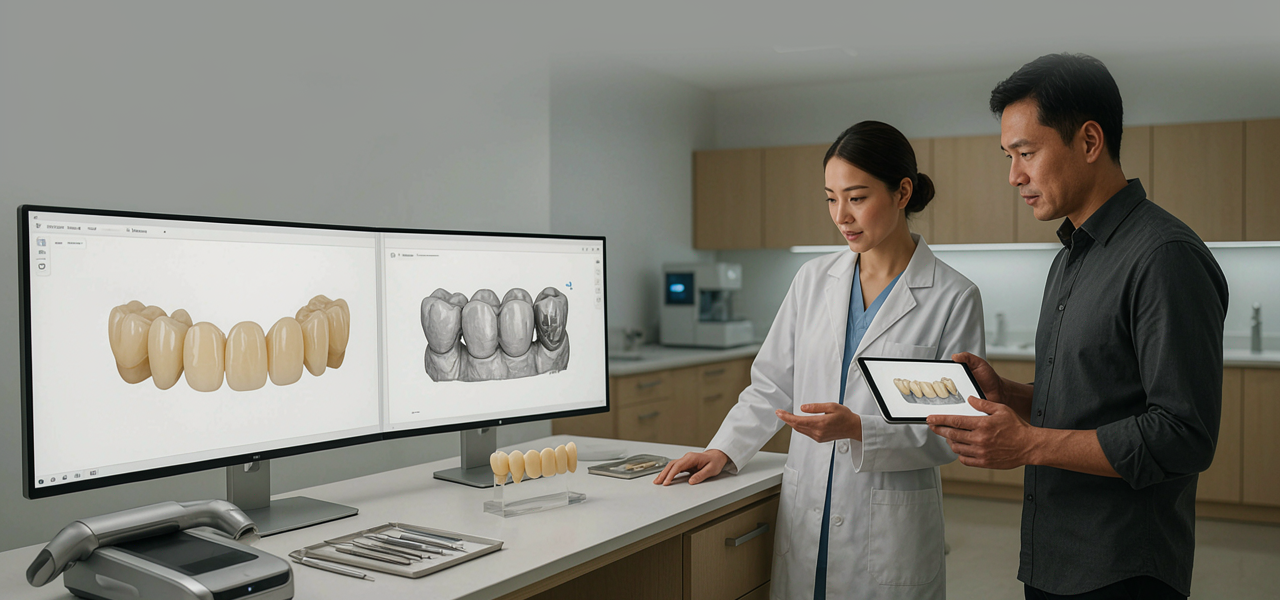
Modern digital dentistry has changed how these restorations are designed and fabricated. Advanced CAD/CAM workflows allow dental laboratories to work from highly detailed digital information, creating restorations with greater consistency and carefully controlled contours. For dentists seeking predictable restorative workflows, digital technology can provide valuable support from case submission through final fabrication.
Dentek Digital is a Phoenix-based digital dental laboratory focused on advanced restorative solutions, including crowns, bridges, implant restorations, and other fixed products. The laboratory has been an early adopter of digital CAD/CAM workflows and combines digital technology with experienced technical craftsmanship.
Why Dental Bridges Require Careful Planning
A bridge must do more than occupy an empty space. It should function comfortably with surrounding teeth, maintain appropriate contacts, support proper occlusion, and complement the patient’s natural smile.
Several factors deserve attention before fabrication begins:
- The condition of the supporting teeth
- Available restorative space
- Occlusal relationships
- Margin design and preparation quality
- Shade and translucency requirements
- Selection of an appropriate restorative material
- Digital impression or scan quality
- Communication of clinical preferences to the laboratory
When these details are considered together, the laboratory can create a restoration that supports both functional and esthetic objectives. Digital workflows can make this process more controlled by providing a detailed virtual model for design and evaluation.
How CAD/CAM Improves Bridge Fabrication
Computer-aided design and computer-aided manufacturing have become central components of modern restorative dentistry. Instead of relying exclusively on traditional manual processes, CAD/CAM allows technicians to design restorations digitally before fabrication.
During the design stage, important elements such as margins, contacts, contours, occlusion, and anatomy can be evaluated within a digital environment. This provides an opportunity to identify potential concerns before the restoration reaches the manufacturing stage.
Dentek Digital uses advanced CAD/CAM technology and digital production methods to fabricate fixed restorations. The laboratory reports that its digitally designed restorations are developed with attention to fit, function, esthetics, and predictable clinical performance.
For dental practices, this approach can also improve communication. Digital case files can be transferred efficiently, allowing clinical information and laboratory instructions to move through the workflow without relying entirely on physical impressions or manual transfers.
Choosing Materials for Dental Bridges
Material selection is another important consideration when planning a bridge. Different clinical situations may call for different combinations of strength, esthetics, translucency, and durability.
Dentek Digital provides several fixed restoration options, including zirconia, e.Max, porcelain-fused-to-zirconia, porcelain-fused-to-metal, milled gold, and other digitally fabricated solutions. The laboratory’s fixed product offerings are designed to accommodate different restorative requirements and esthetic expectations.
Zirconia for Strength and Function
Zirconia has become a widely used material in restorative dentistry because of its strength and versatility. Monolithic zirconia can be particularly useful when durability and functional performance are important considerations.
Dentek Digital offers proprietary VivaZir Monolithic Zirconia as part of its fixed restoration solutions. Material selection should still be based on the individual clinical case, preparation, occlusion, location, and dentist’s treatment plan.
Lithium Disilicate for Esthetic Cases
Lithium disilicate materials such as e.Max can provide highly esthetic results when translucency and natural appearance are priorities. These materials may be particularly valuable for cases where the restoration must blend closely with adjacent dentition.
A skilled laboratory team can use digital design alongside material-specific fabrication techniques to help maintain anatomical form and esthetic consistency.
The Importance of Accurate Digital Impressions
A high-quality restoration begins with accurate information. An intraoral scan provides a digital representation of the prepared teeth and surrounding structures, giving the laboratory the information required to design the restoration.
However, technology alone does not guarantee an accurate outcome. The quality of the scan, preparation, margins, occlusal records, and submitted case information still matters.
Before sending a digital bridge case, dental teams should verify:
- Scan coverage is complete.
- Preparation margins are clearly captured.
- The opposing arch is accurately recorded.
- The bite registration is reliable.
- Clinical photographs are included when esthetic evaluation is important.
- Prescription details clearly communicate the desired material and design.
A complete digital submission gives technicians stronger information to work from and can reduce unnecessary communication delays.
Shade Matching Is Part of the Restorative Process
For anterior bridge cases, technical fit is only part of the equation. Shade, translucency, surface texture, characterization, and anatomy all contribute to a natural-looking restoration.
Digital communication can make shade information easier to document and transfer, but photographs and detailed clinical records remain valuable. Dentek Digital supports custom shade workflows using Vita Classic and Vita 3D-Master shade guides, along with digital photographs and in-house ceramic expertise for demanding anterior cases.
A thoughtful shade prescription should communicate more than a single shade number when the case requires detailed esthetic integration. Notes about translucency, characterization, incisal effects, and neighboring teeth can provide technicians with useful context.
Better Fit Can Support Efficient Clinical Delivery
A bridge that seats accurately can help make the delivery appointment more efficient. Poorly defined margins, incorrect contacts, occlusal discrepancies, or inadequate design information may create additional adjustment requirements.
Digital workflows can help address these challenges before fabrication. Dentek Digital states that digitally designed restorations are produced with verified margins, controlled occlusion, and attention to passive fit, with the goal of reducing adjustment requirements and supporting efficient seating.
This does not eliminate the importance of clinical verification. Every restoration should still be evaluated by the treating dental professional before final placement. Digital technology serves as a valuable tool within the broader clinical process rather than a substitute for professional judgment.
A Reliable Workflow Starts With Communication
Technology works best when clinical and laboratory teams communicate clearly. A detailed prescription can help technicians understand the dentist’s expectations before the case enters production.
Useful case information may include:
- Restoration type and number of units
- Preferred material
- Preparation design
- Shade information
- Occlusal considerations
- Esthetic objectives
- Photographs when appropriate
- Special design instructions
- Relevant patient-specific considerations
Dentek Digital maintains a digital-first workflow that allows dental practices to submit intraoral and desktop scans through its customer portal. The laboratory accepts digital impressions from several major scanner systems, supporting practices that already use different digital ecosystems.
This flexibility can be particularly useful for practices transitioning from traditional workflows to more digitally integrated restorative processes.
What Dentists Should Look for in a Dental Laboratory
Selecting a laboratory for fixed restorations involves more than comparing turnaround times or pricing. A strong laboratory partnership should provide consistency, technical expertise, material knowledge, communication, and dependable quality control.
Before choosing a laboratory, consider asking:
- Does the laboratory support digital impressions?
- Which bridge materials are available?
- How are cases reviewed before fabrication?
- Can the laboratory support complex restorative cases?
- How are shade instructions handled?
- What quality-control procedures are used?
- Can the laboratory work with the practice’s preferred digital scanner?
- Is technical support available for case planning?
Dentek Digital combines CAD/CAM technology, premium restorative materials, experienced technicians, and structured production processes. Its stated quality standards cover fixed restorations as well as removable products, splints, nightguards, implant restorations, and implant planning services.
The Future of Digital Bridge Restorations
Digital dentistry continues to influence how dental practices communicate with laboratories and how restorations are designed and manufactured. As scanning, CAD software, milling, 3D printing, and digital treatment planning continue to develop, restorative workflows are becoming increasingly connected.
For dental bridges, this evolution offers an opportunity to bring greater consistency to case design while maintaining the importance of clinical expertise. The most effective approach combines accurate patient information, thoughtful treatment planning, appropriate material selection, skilled laboratory craftsmanship, and careful clinical evaluation.
Digital technology is not simply about replacing an older process with a newer one. Its real value comes from creating a more connected workflow in which dentists and technicians can work from detailed information and identify potential concerns earlier.
Conclusion
Dental bridges continue to play an important role in restorative dentistry, but successful outcomes depend on careful planning, accurate records, appropriate materials, and precise fabrication. Digital CAD/CAM workflows provide dental practices with tools that can support consistency, efficient communication, detailed design, and reliable production.
A laboratory with strong digital capabilities can become an important part of that process. Dentek Digital combines digital dentistry, CAD/CAM technology, experienced technical craftsmanship, and a broad selection of fixed restoration materials to support modern dental practices.
For dentists looking to improve the consistency of fixed restorative cases, evaluating the laboratory workflow behind each restoration is a worthwhile step. The right combination of technology, expertise, communication, and quality control can help create restorations designed for functional performance, natural esthetics, and confident clinical delivery.
